Paper making in Nishiaizu, Fukushima
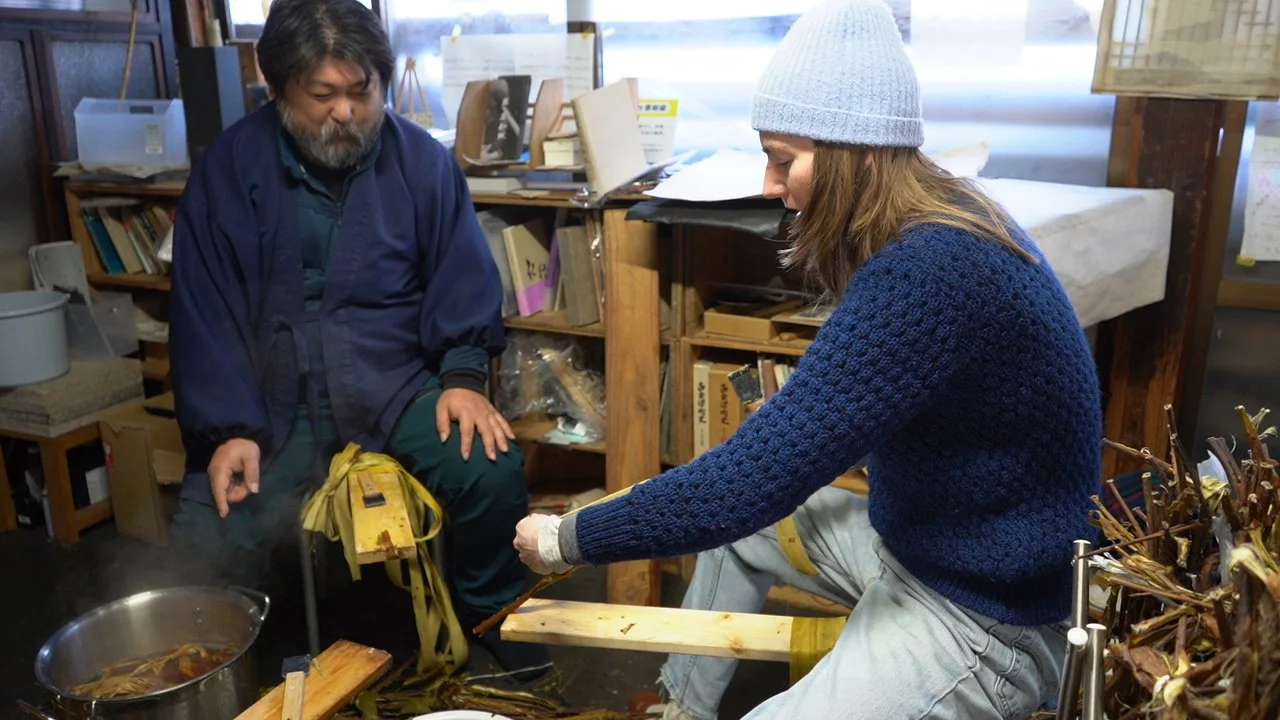
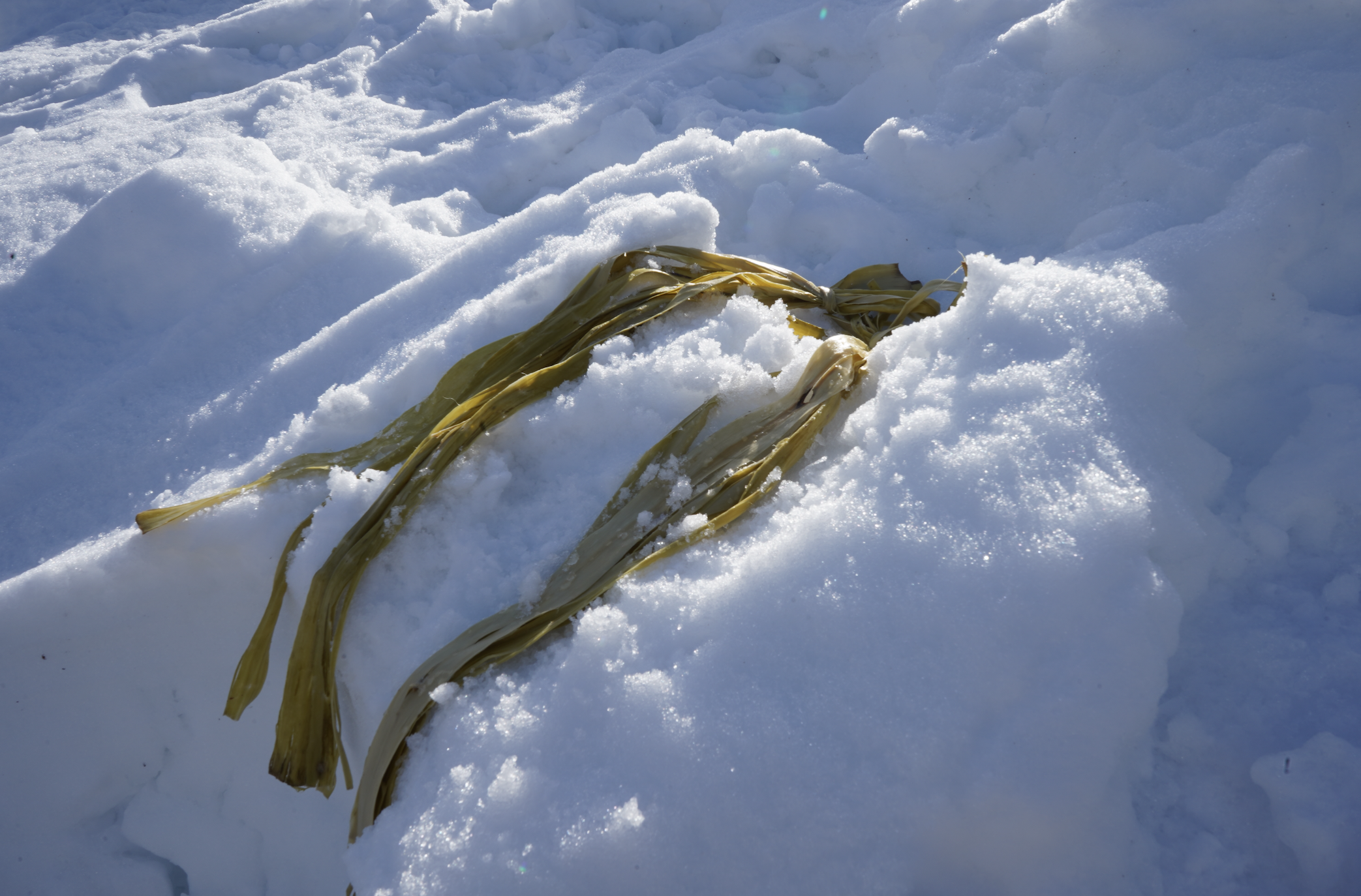
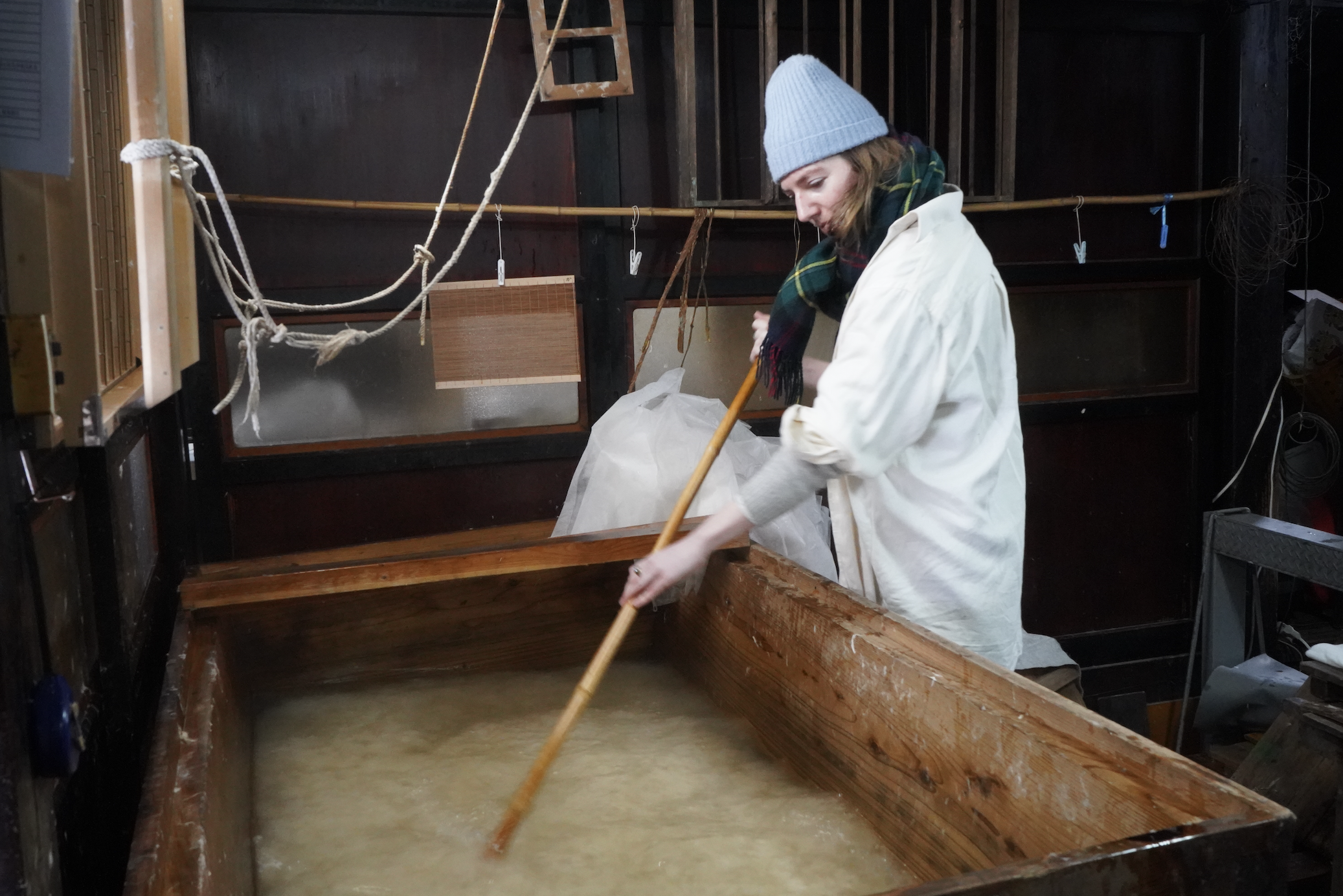
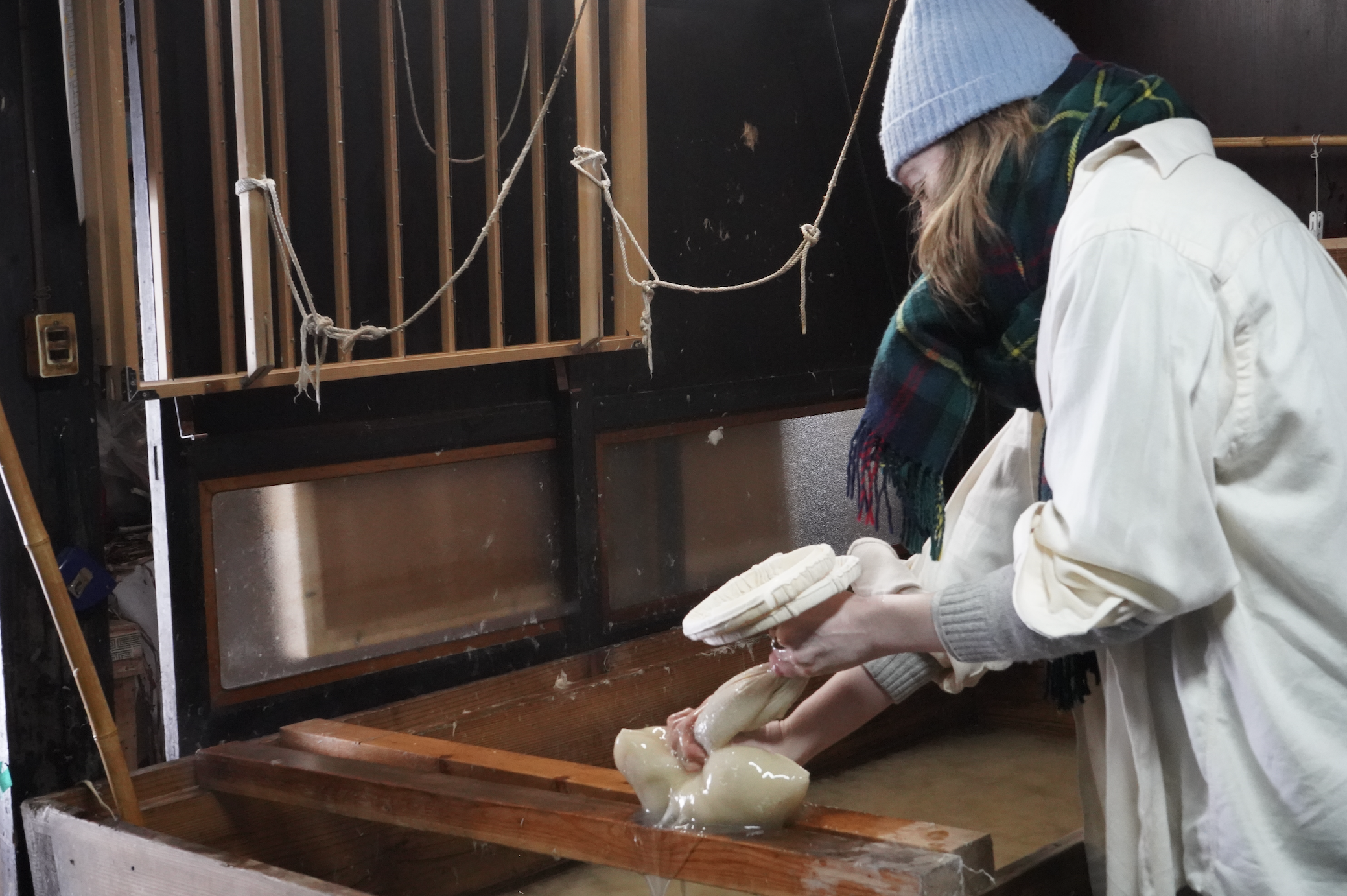
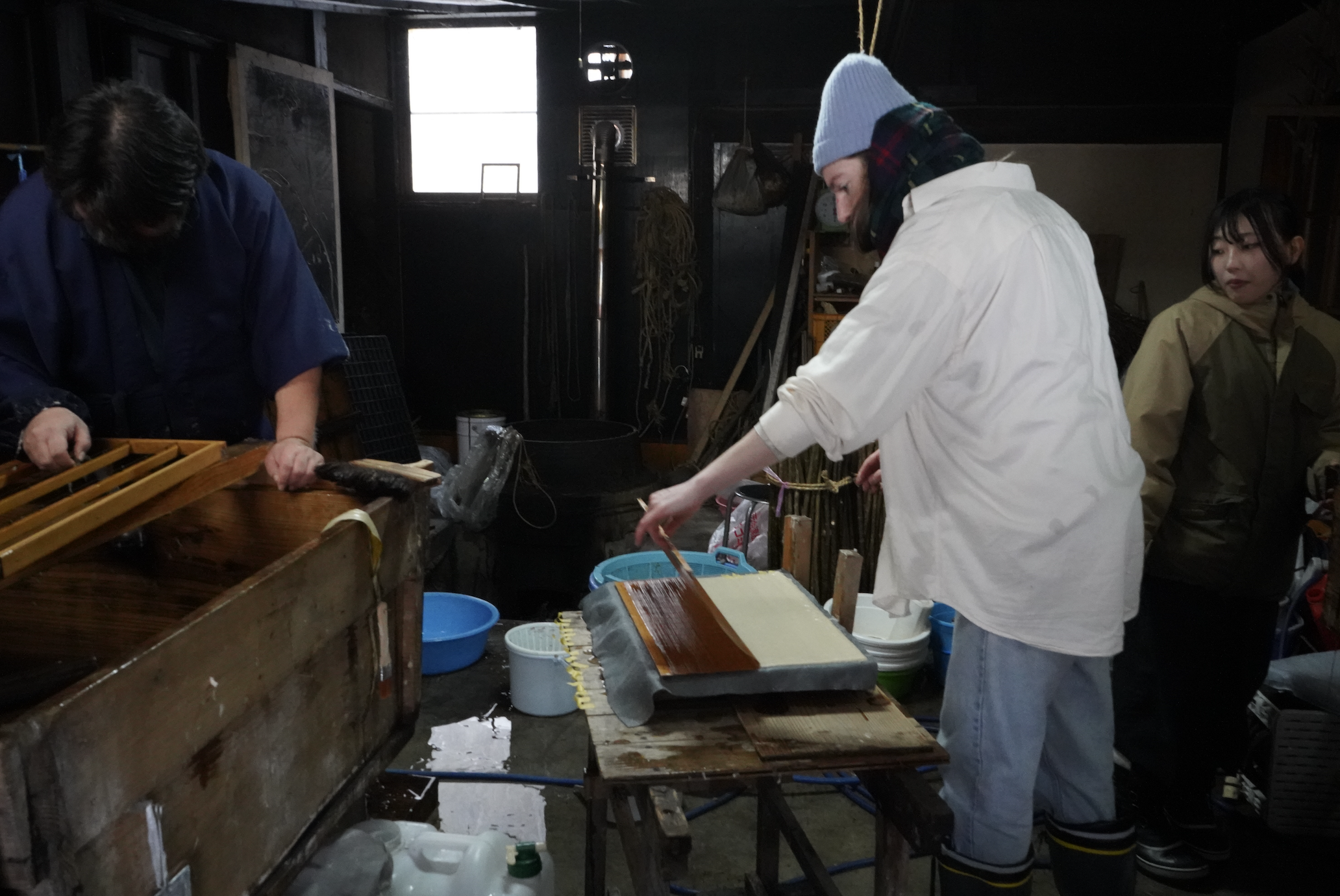
The three-day papermaking process began with preparation. Much of it resembled cooking with slow, methodical, and attentive labor of love. Under the guidance of Tetsuya Takizawa (滝澤徹也), a master papermaker and artist I worked with during my residency at Nishiaizu International Art Village (NIAV), we began by boiling mulberry harvested from just outside his studio.
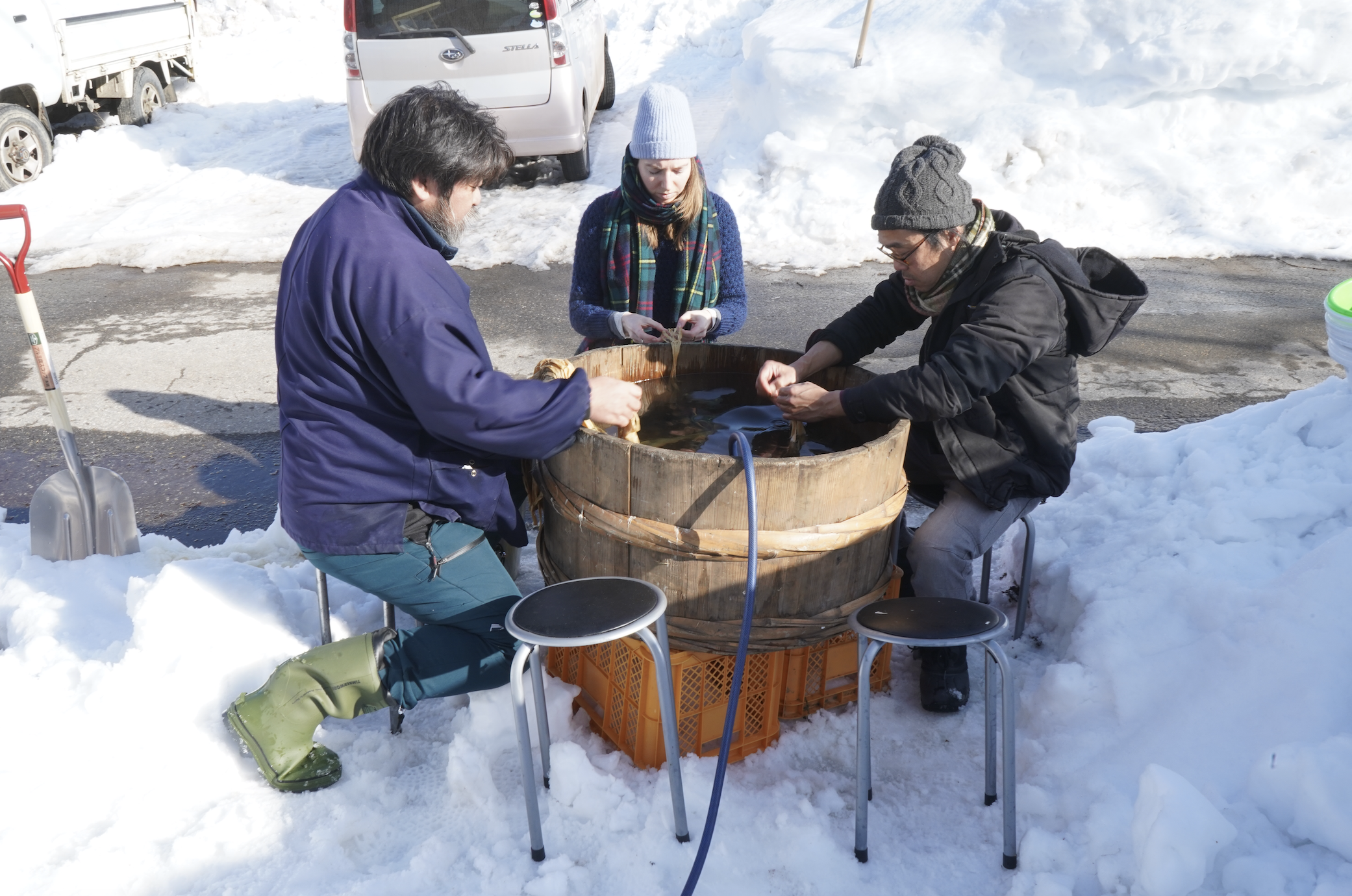
With the help of Tetsuya and fellow residents and friends from NIAV, we carefully cleaned the fibers of all impurities. I was focused on making the paper as clean and consistent as possible. The water remained warm, but the air outside was sharply cold, and we worked quickly before the winter sun dropped behind the mountains. This was perhaps the most physically demanding part of the process, with our hands submerged, time compressed, but it was sustained through collective effort.
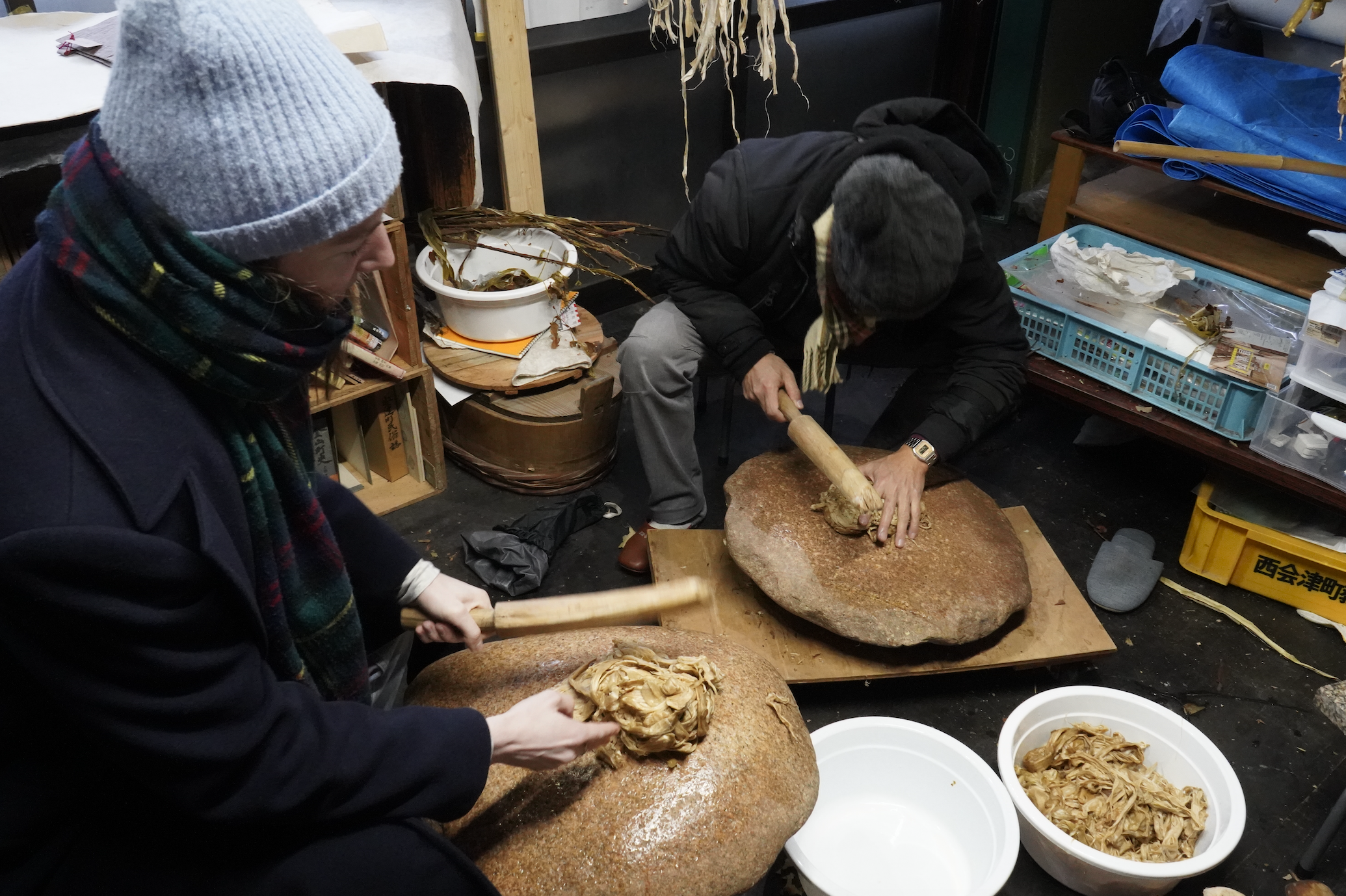
Once cleaned, the fibers were beaten into pulp using wooden tools against the backs of large, flat stones. This became my favorite stage. We were back indoors, and the steady, shared rhythm of multiple hands beating the mulberry created a palpable cadence, an almost musical repetition.
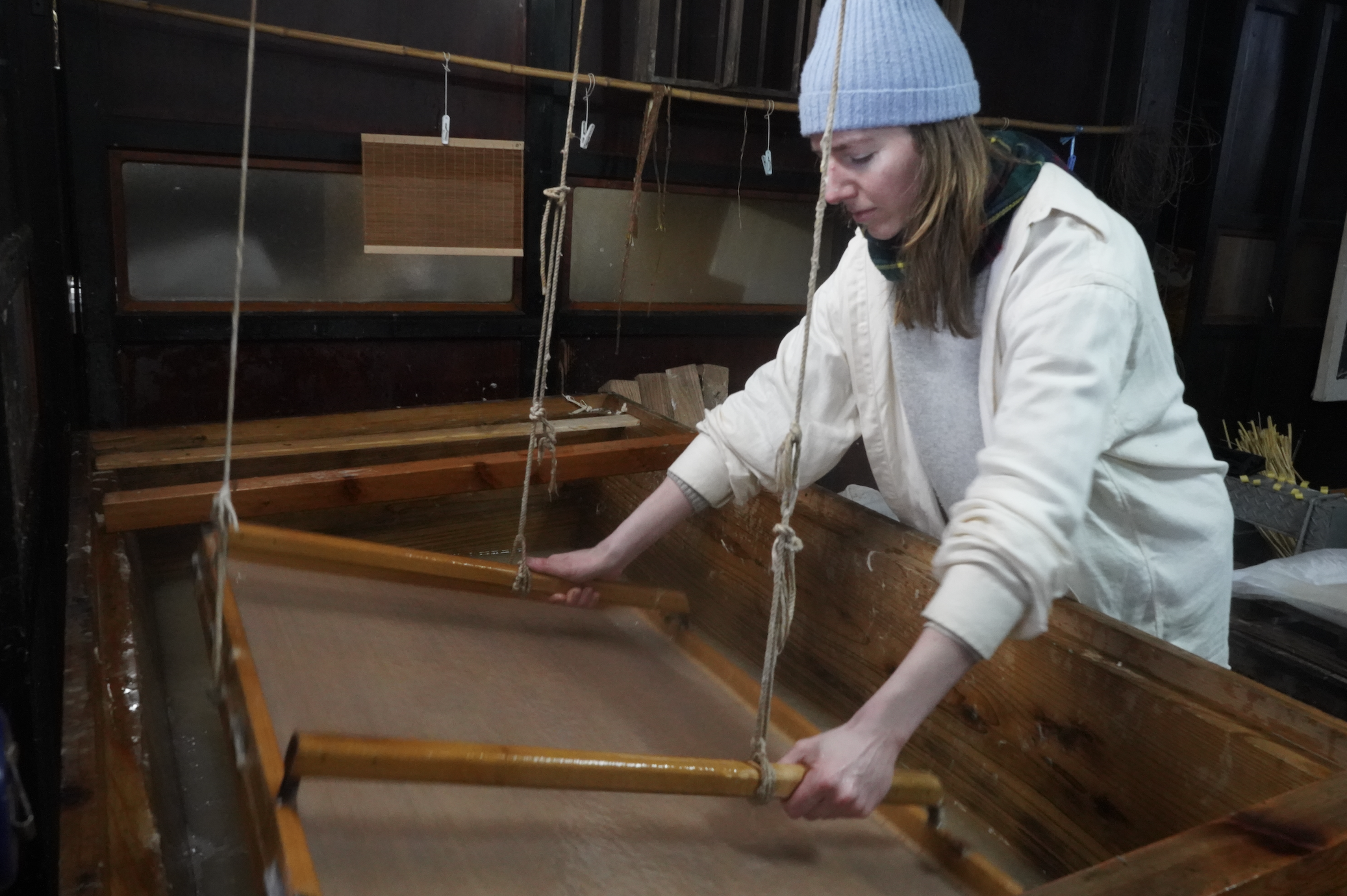
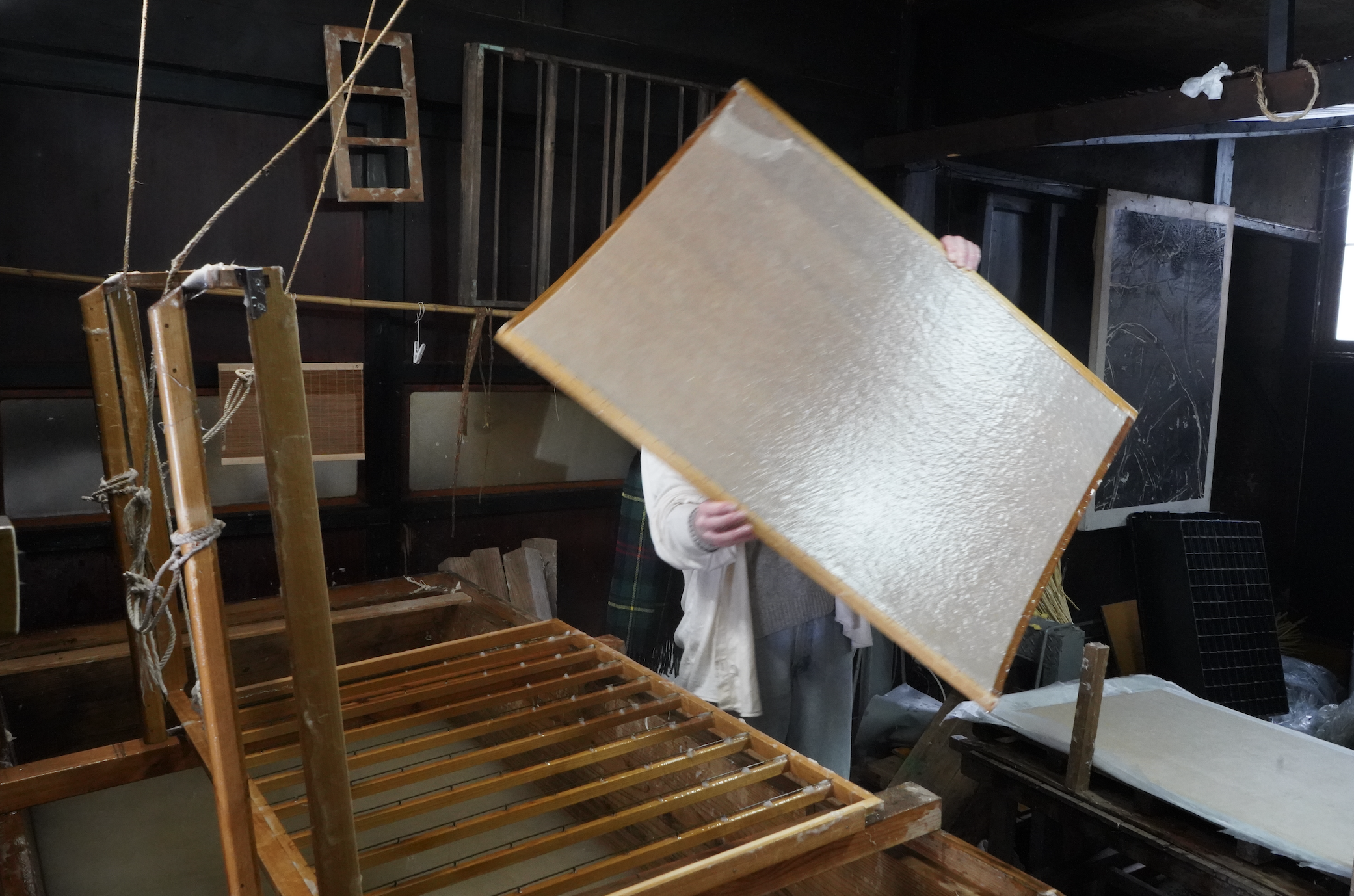
The following day, the pulp was mixed with water and a natural adhesive derived from mulberry, its viscosity similar to okra. The mixture was poured into large vats, where I dipped the frame that would shape each sheet of paper. The wet pages were stacked, pressed, and then dried on wooden boards, allowing the grain of the wood to imprint itself onto the surface.
Once dried, the paper was complete, ready to become the support for my next series of works on paper.
I am deeply grateful to Tetsuya Takizawa for generously sharing his knowledge and process, and to Yuzu, Kotori, and Noa for their care, strength, and collaboration throughout the making. This work would not exist without them.